ANT BEE JOURNAL · COFFEE ORIGINS
Cầu Đất, where the Arabica story begins
Cầu Đất coffee carries the story of the Đà Lạt highlands: hillsides, a cool climate, and the steady work of growers. Knowing the origin helps you understand the Arabica in your cup, from its variety and processing method to the records you can check.

Indicative elevation
Coffee species
Flavor profiles
- About 1,500 m
- Indicative elevation for Cầu Đất
- Arabica
- Catimor and other varieties listed in the records
- By harvest
- Read flavor alongside variety and processing
Where is Cầu Đất coffee grown?
Cầu Đất is a growing area southeast of Đà Lạt in Lâm Đồng Province. Under current administrative boundaries, it lies in Xuân Trường–Đà Lạt Ward. The ward combines the former Ward 11 and the former communes of Xuân Thọ, Xuân Trường, and Trạm Hành. Older records or labels may still say “Xuân Trường Commune, Đà Lạt City.” Information from the local government.
In coffee, Cầu Đất is the name of a growing region. The place name tells you about the origin in general. To find where a particular pack came from, check the product information and the lot code.
Map source: Google Maps, searched using the region name shown on Ant Bee Trace. The map gives a general location and does not mark growing-area boundaries, geographical indication boundaries, or Ant Bee’s land parcels.
A region with a long coffee history
The Đà Lạt gazetteer records coffee cultivation around 1930, with Xuân Trường and Trại Hầm among the first places to grow it. Coffee farming in the area dates back to the first half of the twentieth century. Read the Đà Lạt gazetteer.
Elevation, soil, and climate shape the growing region
Cầu Đất is often associated with an elevation of about 1,500 meters, a cool highland climate, and basaltic soil. These are important conditions for understanding how Arabica grows there. The Cầu Đất card on Ant Bee Trace lists 1,520 meters for that specific regional record. Elevation varies across farms.
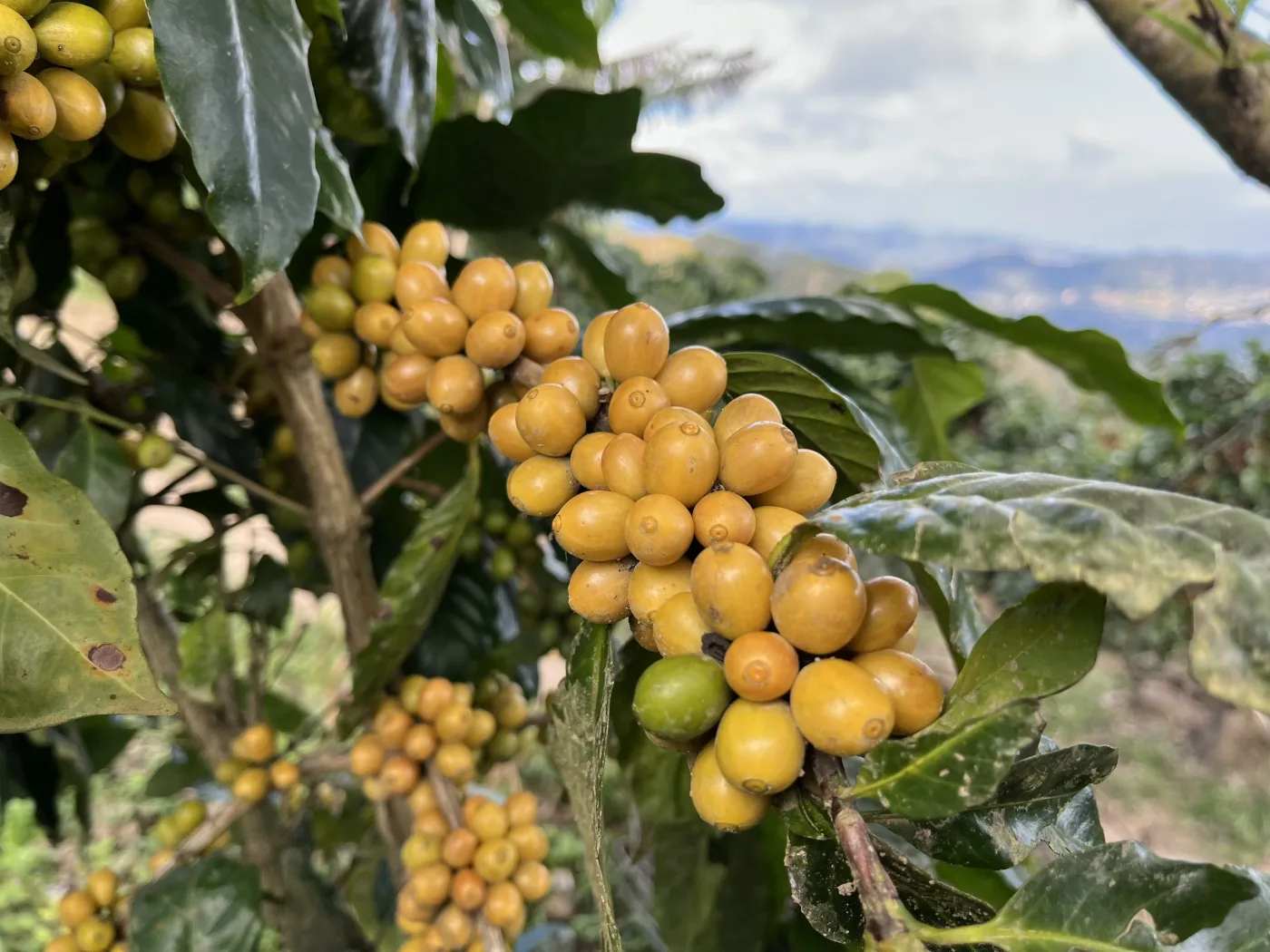
Hillsides differ in sun exposure, slope, soil, and farm management, creating different growing conditions. Consider elevation alongside the variety and how the plants are cared for. World Coffee Research also shows that sensory quality is influenced by the interaction between variety and environment. See the WCR research.
Quality also comes from the small details
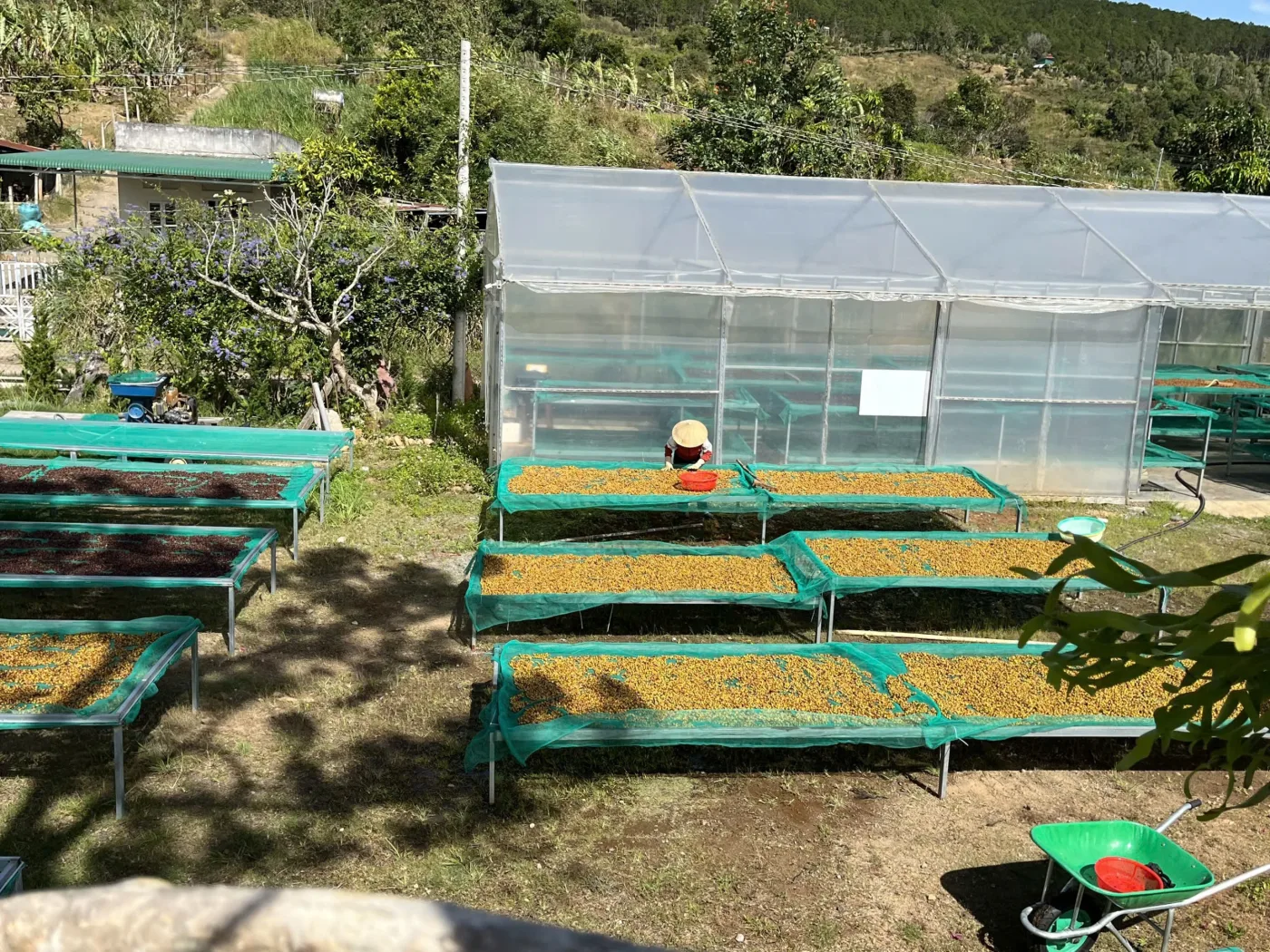
Canopy care, soil and water management, crop health, harvest timing, and sorting all matter when evaluating a coffee-growing area. After harvest, cherry handling, drying, and storage continue to affect green coffee quality.
For a buyer, specific questions are often more useful than a broad claim: Which variety? Which harvest? How was it processed? What records are available? Ant Bee connects the origin story to the data for each lot to give those conversations a clearer foundation.
Cầu Đất Arabica: varieties and processing
Arabica is a coffee species and Cầu Đất is a place. Catimor, Yellow Bourbon, or Moka on a pack identifies the variety or name used for that product. When choosing a Cầu Đất coffee, read the variety and processing method along with the region.
Ant Bee’s regional flavor records include Catimor and Yellow Bourbon from different harvests. In the World Coffee Research catalog, Catimor refers to a group of lines whose breeding history involves Caturra and Timor Hybrid. The name alone does not specify every line’s traits or how it will taste. See WCR’s T8667 variety profile.
How to read the processing label
Honey: The coffee is depulped and dried with part of the mucilage still attached. The term describes processing without adding honey.
Natural: Whole coffee cherries dry with their skin and fruit still intact before the beans are removed.
Ant Bee’s Red Honey, Yellow Honey, and Natural records refer to particular samples and harvests. The final flavor also depends on the coffee itself, how processing is managed, and the roast and brew.
How Cầu Đất tastes across harvests
“What does Cầu Đất coffee taste like?” is easier to answer when you start with a particular sample. Published Ant Bee records include fruit, citrus, flowers, roasted nuts, caramel, and chocolate notes, with differences by variety and processing.
Two examples illustrate that range. Catimor Red Honey from 2025–2026 recalls apple, grape, papaya, and citrus alongside roasted nuts and chocolate. Yellow Bourbon Natural from 2023–2024 has brown sugar, chocolate, dried fruit, citrus, and jasmine or tea notes. These are sensory impressions of the samples.
FLAVOR BY HARVEST · FLAVORARCHIVES
- 2025–2026 · Catimor Red Honey · 83.31
- 2024–2025 · Catimor Yellow Honey · 82.13
- 2023–2024 · Yellow Bourbon Natural · 82.57
- 2022–2023 · Catimor Honey · 82.22
- 2021–2022 · Catimor Honey · 80.33
- 2020–2021 · Not published
- 2019–2020 · Arabica Yellow Honey · 82.29
Source: regional flavor records published by Ant Bee. These scores apply to representative origin samples by harvest. Each finished lot has its own record. Varieties and processing differ across these years, so the scores do not establish a continuous rise or fall in quality.
As you taste, start with three observations: what the aroma reminds you of, how the acidity feels, and how the finish changes as the cup cools. “Citrus” and “chocolate” relate the taste to familiar sensations that people may perceive at different intensities.
Cầu Đất and the Lâm Đồng Coffee geographical indication
A growing region’s value also depends on accurate origin information and proper use of its name. On October 10, 2025, the Intellectual Property Office issued Decision No. 636/QĐ-SHTT, granting Geographical Indication Registration Certificate No. 00147 for “Lâm Đồng” coffee. This is the regional registration. Source: Ministry of Science and Technology.
Ant Bee publishes its company authorization, LĐ-CP-004, issued by the Lâm Đồng Department of Agriculture and Environment under Decision No. 1671/QĐ-SNNMT on December 17, 2025. It is valid for five years from the issue date. Readers can verify it in Ant Bee’s public documents.
The two documents serve different purposes: one establishes the “Lâm Đồng” geographical indication, and the other records an organization’s authorization to use it. For a specific pack, check the product and eligible lot record along with the documents. The Cầu Đất name or a QR code alone is not enough.
A geographical indication establishes a link to origin. Organic certification and specialty scores serve different purposes. Knowing what each document verifies helps protect the region’s name and gives drinkers a clearer picture of the evidence.
From the growing region to the coffee in your hands
Start with lot 260917-01 of Cầu Đất–Đà Lạt Catimor Arabica. The public record lists Cầu Đất as its origin, a roast date of September 14, 2026, and a packaging date of September 17, 2026. From there, open the production journey, growing region, or flavor profile to learn more.
This is an example lot. For your own coffee, scan the QR code or enter the lot code from the pack, then compare the product name and dates. The Ant Bee Trace guide explains what each section means.
Taste to discover the differences
Explore Cầu Đất’s varieties and processes with Ant Bee’s Catimor or Yellow Bourbon Arabica. Read about each coffee, brew them the same way, and make a note of what you taste. Comparing them helps you find what you enjoy beyond the score.
Understand where your coffee starts and get more out of every cup.
Cầu Đất is worth exploring for its landscape, the growers’ work, and the flavors that change with the seasons. Ant Bee shares photographs and records of growing regions and coffee lots to bring the journey closer to you.
Frequently asked questions
Is all Cầu Đất coffee Moka?
Cầu Đất is a growing region. Check the information for a particular product to learn its variety. Ant Bee’s records include Catimor and Yellow Bourbon from different harvests.
Why can two packs labeled Cầu Đất taste different?
Variety, harvest, processing, roast, freshness, and brewing can all make a difference. The region is one part of the flavor story.
Does the 83.31 score apply to every Ant Bee Arabica?
The score belongs to the 2025–2026 Catimor Red Honey sample published in FlavorArchives. Apply a regional sample score to a finished lot only if there is a direct link to its evaluation.
Where can I find Ant Bee’s geographical indication authorization?
Authorization LĐ-CP-004 is available in the Ant Bee Trace documents section. Check it alongside the information for the product and lot you are buying.
References
Information checked on October 3, 2026 against public Ant Bee Trace records, the Đà Lạt gazetteer, Xuân Trường–Đà Lạt Ward information, the Ministry of Science and Technology, and World Coffee Research. Photography by Ant Bee. Embedded map by Google Maps with the provider’s attribution retained.
Indicative elevation: Lâm Đồng Science, Technology and Business Bulletin, issue 5/2024. Further reading: the Lâm Đồng Coffee geographical indication and Ant Bee.