
- Water temperature is one of the most important variables in coffee brewing.
- Sometimes you change the beans, grind size, or amount of water and the cup still doesn’t taste right.
- A common cause is water that is too hot or too cool.
- Whether you use a phin, V60, espresso machine, or French press, water temperature directly affects extraction speed and which compounds dissolve.
- Understanding temperature helps you brew consistently balanced cups that show what the beans have to offer.
Why does temperature affect flavor so much?
- Coffee contains hundreds of soluble compounds, including acids, sugars, lipids, and aroma compounds.
- Temperature affects how quickly and how much of each compound is extracted.
Hotter water extracts more quickly, bringing out acids and aromas, but it can also draw out bitterness and astringency.
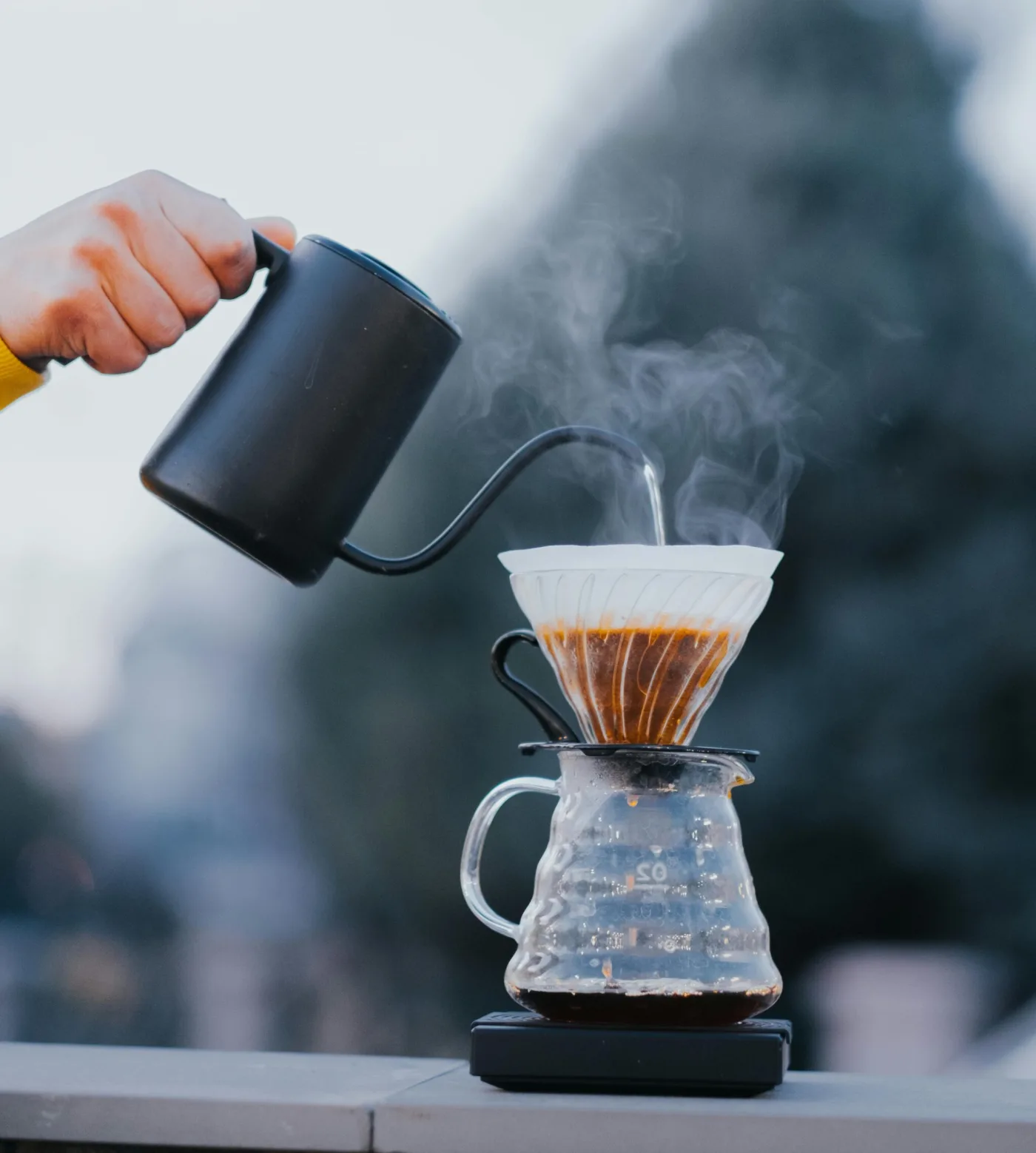
Cooler water extracts more slowly and can let sweetness show through with less bitterness. If it is too cool, under-extraction can make the cup weak, sharply sour, or thin.
Temperature shapes how the coffee tastes: bold or gentle, bright or soft, and balanced or uneven.
The SCA brewing temperature range
The Specialty Coffee Association (SCA) recommends brewing water in the following range:
90–96°C
This range helps you:
- Extract enough acidity for a bright, fresh cup
- Bring out the coffee’s natural sweetness
- Release aromas
- Limit unwanted bitterness with good technique
It is a useful guideline for balanced extraction with most specialty Arabicas. Adjust it for your coffee and recipe.
Why not use water at 100°C?
Boiling water at 100°C can:
- Extract too much of the bitter compounds, including caffeine and chlorogenic acids
- Release volatile aromas too quickly
- Leave the cup harsh and less nuanced
After boiling, baristas often let the water rest for 20–30 seconds before brewing, aiming for 92–95°C.
Adjusting temperature for the beans and roast
- Different coffees brew best at different temperatures.
- Each type of bean has its own characteristics and responds differently to hot water.
Light-roast Arabica
- Suggested temperature: 93–96°C
- Light roasts retain more acidity and more of the bean’s structure. Hotter water can bring out brightness and aroma.
Medium-roast Arabica
- Suggested temperature: 92–94°C
- The acidity, sweetness, and bitterness are more balanced, so slightly cooler water can work well.
Medium-dark or dark roast
- Suggested temperature: 88–92°C
- Darker roasting breaks down the bean structure, making it easier to extract. Very hot water can quickly make the coffee bitter.
Robusta / Fine Robusta
- Suggested temperature: 90–94°C
- Robusta is full-bodied and high in caffeine. Use hot water to bring out its flavor and stay below 95°C to limit harshness.
Adjusting temperature by brewing method
V60 / Pour-over
- 90–96°C, depending on the beans
- Hotter water can open up aromas, especially with light roasts
- If the cup tastes harsh, lower the temperature by 1–2°C
- If it tastes weak or sharply sour, raise the temperature by 1–2°C
Vietnamese phin
- 92–96°C
- The phin extracts slowly and can benefit from hotter water
- With darker roasts, lower the temperature by 1–3°C to avoid harsh bitterness
French press
- 90–94°C
- Longer contact with the grounds means very hot water is usually unnecessary
Espresso machine
- The boiler is often set to 90–96°C
- Espresso is sensitive to heat. A difference of just 1°C can change how it tastes
- Light roast: 93–95°C
- Medium or dark roast: 90–92°C
Cold brew
- 4–20°C, outside the hot-brewing range
- Low-temperature extraction gives a smooth cup with softer acidity
Signs the brewing temperature is off
Water too hot: over-extraction
- Bitter or harsh
- Heavy, dry finish
- Faded aroma
Water too cool: under-extraction
- Sharply sour or weak
- Unbalanced flavor
- Thin body
Adjusting by just 1–2°C often makes a noticeable difference.
How can you keep water temperature consistent without a thermometer?
An electric temperature-control kettle isn’t essential. Here are a few methods to try:
- Bring the water to a boil, then wait 25–30 seconds to aim for about 94–96°C
- Pour the water into a dripper or insulated vessel first to lower it by around 1–2°C
- A gentle hiss can indicate roughly 92–94°C, a rule of thumb some baristas use
- A gooseneck kettle can help keep pouring temperature steadier than an ordinary electric kettle
Specialty cafés keep brewing temperature consistent so the coffee tastes the same from day to day.
References
- Specialty Coffee Association (SCA) – Water Quality & Brewing Standards
- Barista Hustle – Temperature & Extraction Science
- Perfect Daily Grind – Brewing Temperature Research
- CoffeeChemistry.com – Solubility & Heat